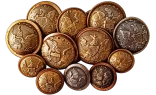
General Staff Buttons
Button Galleries
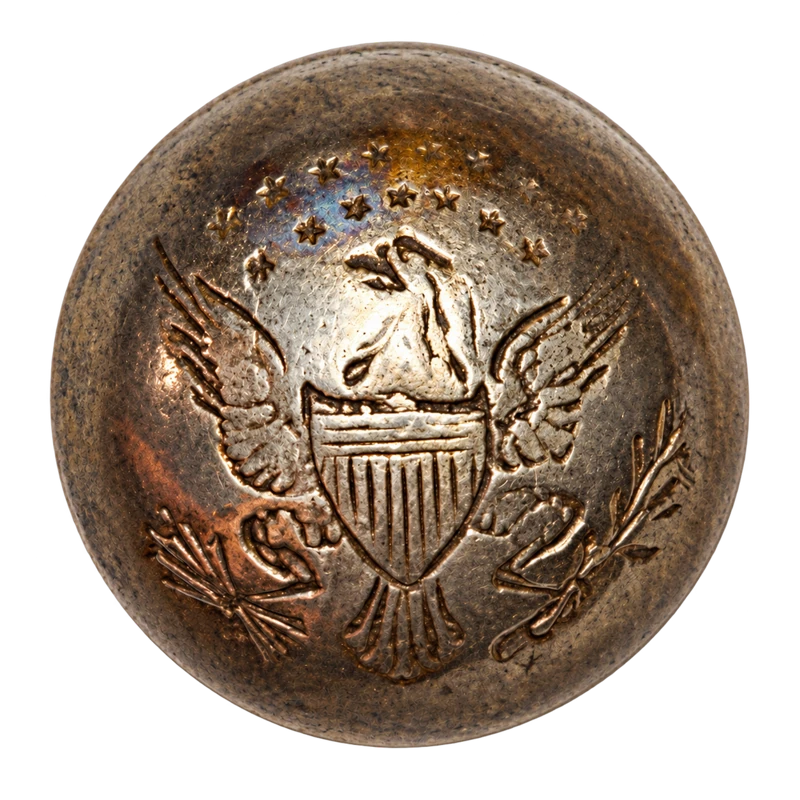
Ball Buttons
This finely crafted ball button, used on Civil War–era U.S. General Staff uniforms, exemplifies mid-19th-century military elegance and authority. Featuring a convex, domed “ball” shape made of gilt brass, it was designed to reflect light and resist tarnish while conveying prestige. The face typically displays an eagle clutching a shield and olive branch—symbols of strength and unity—surrounded by a lined or plain field. Attached via a sturdy shank on the reverse, these buttons adorned officers’ coats and frock uniforms, representing rank, craftsmanship, and the pride of the Union’s commanding elite during America’s defining conflict.
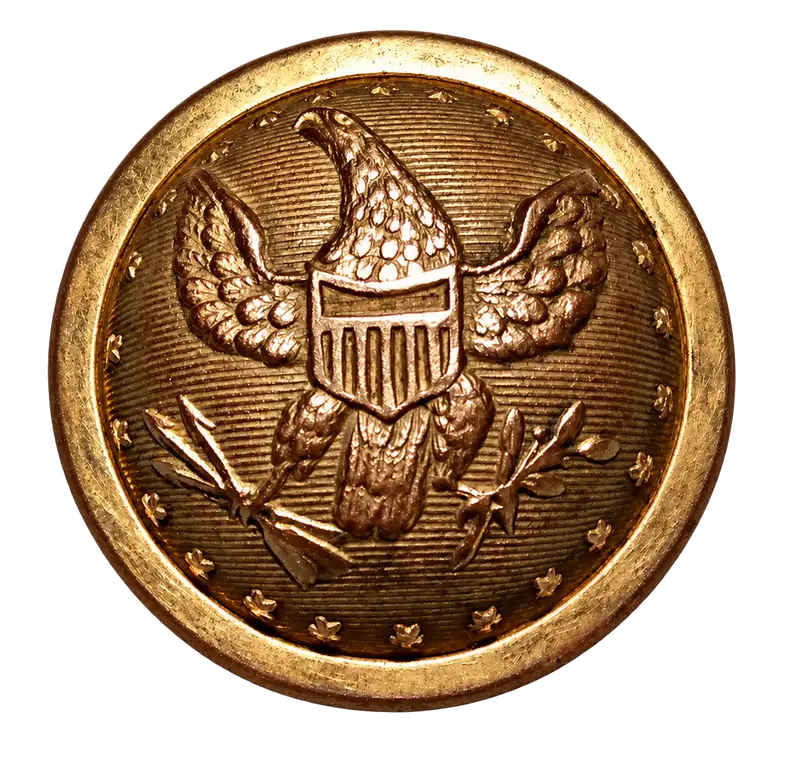
Pre-War Buttons
Before the outbreak of the Civil War, General Staff buttons reflected the refinement and growing professionalism of the antebellum U.S. Army. Typically gilt brass with a convex “ball” or flat profile, these buttons bore a proud spread eagle clutching arrows and an olive branch—early symbols of military readiness and peacekeeping authority. Crafted by noted manufacturers like Scovill and Horstmann, their quality and intricate detail reflected mid-19th-century military pride. Worn by officers on dress and frock coats, these pre-war buttons represent the tradition, craftsmanship, and national identity that would soon be tested amid the coming division of the American republic.
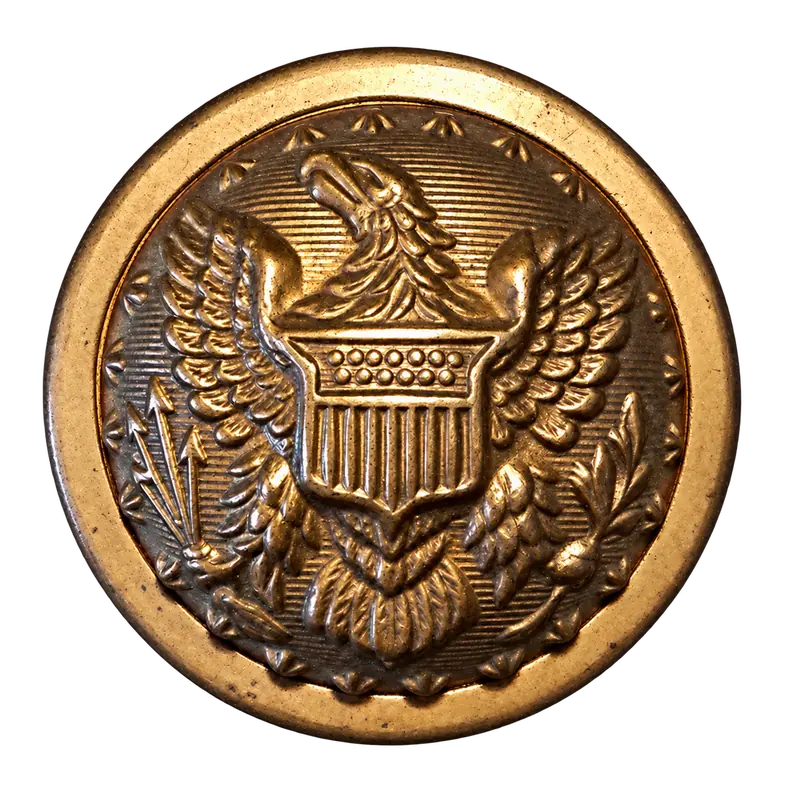
Post-War Buttons
Following the Civil War, General Staff buttons continued to symbolize distinction within the evolving U.S. Army uniform tradition. Retaining the familiar gilt finish and domed “ball” design, these post-war examples often featured refined detailing and improved manufacturing techniques. The eagle motif persisted—now rendered with sharper relief and standardized features—representing continuity, authority, and national pride during Reconstruction and beyond. Produced by firms such as Scovill and Waterbury, these buttons were both functional and ornamental, adorning dress uniforms of officers who carried forward the legacy of the Union Army into a new era of professionalized American military service.